Responding to Feedback

two_sidesPicture the most obnoxious person you know. The one who exasperates you and puts dangerous words on the tip of your tongue. If you will, you can learn something from that person–even beyond things you want to avoid doing because of his bad example. It takes more maturity than most people have, but it is possible to learn helpful things from the most unhelpful person. If not, why did God put that person in your life?

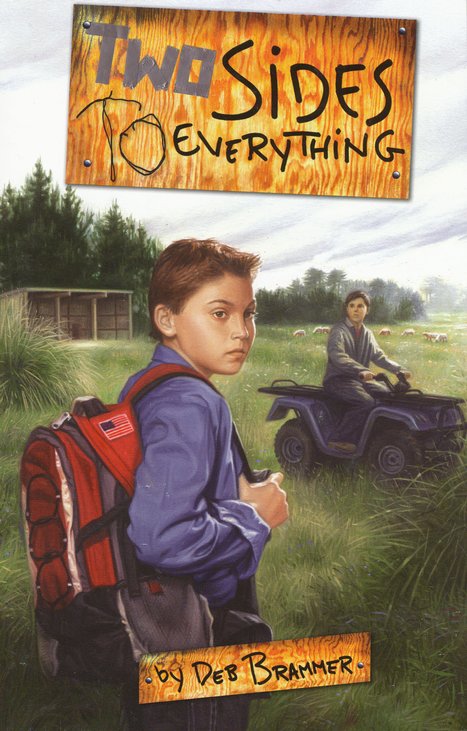
In my book Two Sides to Everything Josh fleshes out this principle. That protagonist has been challenging this author ever since he came to life on the pages of my book. It isn’t easy to learn from people with flagrant flaws who express criticism in the least sensitive ways. It means listening to learn, weighing thoughts before dismissing them, and viewing things fairly from another perspective. Skills like that are quickly becoming a dying art, yet how we need them!

In the TV show from the 1980’s Perfect Strangers, immigrant Balki tells his American cousin Larry, “On Mipos when someone points out a flaw in our lives we thank him for helping us to experience personal growth.” Larry’s reply: “Well, this is America, and in America we shy away from personal growth.”

Of course, criticism is an even more useful tool if the person offering it does so kindly and constructively. Even then most of us are quick to defend ourselves, and slow to learn from it. All of us need to be open to feedback. If we can take an honest look at our weaknesses, we can overcome them and experience personal growth.

As writers, when we put our passions into print, each manuscript can become a precious child, an extension of ourselves. It hurts to see it criticized. Our friends know enough to defend its good qualities and overlook the bad. This makes us feel good about ourselves, but it doesn’t improve our writing. We need to treasure the true friends who will kindly offer constructive criticism.

Imagine the editor who reads manuscripts all day long, and has to reject most of them. Far from being the meanie we make her out to be, she must quickly tire of returning standard rejection slips which she knows will disappoint writers and ruin their day. Overworked and barely keeping up with her schedule, she can hardly do more. On occasion she takes the time to offer a few very helpful words. If the writer bristles at the criticism, the editor will take the easy way out next time and just send the standard letter. But the wise writer will treasure knowledgeable criticism and learn from it.

As Christian workers we gain insight from our experience. We know “what works” and sometimes we are slow to change. We can learn, however, from even a new Christian who sees our ministry from a fresh perspective. We may be ready to teach others, but we also have to be ready to learn from others.

We usually learn more from criticism than praise, but happily, we can profit from positive feedback as well as negative when it is specific enough to give clear direction.

Today my prayer for myself and all of us is that we will learn to profit from constructive criticism and look for ways to encourage each other with positive feedback.

Finding Time to Pursue your Passion

writing resourcesLet’s say you have a passionate interest you want to pursue, but can’t find the time to do it. Maybe it’s more than just a fun hobby. Maybe it’s a ministry that you feel the Lord is leading you into.

For me it was writing. I believed God wanted me to do this, but I had to find time to do it along with being a mother and missionary wife. How do you find the time to pursue your passion?

These things help me to prioritize my time and decide which ministries to take part in.

Make the time.

Lee Roddy says, “We tend to do what is most important to us and make excuses for the rest.” If you feel the Lord leading you into a ministry, but don’t have the spare time to pursue it, this may be where you need to start.

I realized that most regularly published authors don’t find spare time lying around and use it to write. They look at their schedule and responsibilities and carve out time to write.

Thirty years ago I wanted to write for Christian publication. I felt God wanted this too. I had an article accepted in 1978 and three more in 1979. Then in 1980 my husband and I took our 10-month old daughter to Taiwan. We spent two years in full-time language school. During that time our second daughter was born. Those days I truly had no time to write. I did have three articles accepted in 1982, but I wrote very little during those days. But the clock was ticking and I knew my time would come.

In 1985 my daughter started kindergarten in a nearby city. Every day I drove her to school, dropped her off, then went to a nearby storefront church. I pulled out my typewriter (no computer yet) and spent the morning writing. That gave me five mornings a week. I wrote articles and short stories specifically targeted toward a particular take-home paper market. That school year I had 15 articles accepted for publication.

That year I got a good solid start in writing for Christian publication. After that I usually tried to write one article or story a month. Some years we travelled on furlough back in the States and I had almost no time to write. But as we got back into our schedule each time I carved out some specific time period to write. Now that my girls are married and away from home I still have many ministry obligations, but this season of life brings me more freedom to arrange my schedule and work on writing.

Focus.

Sometimes I run into people who really want to write for publication. I talk to them about getting started and they show a lot of interest. Later I run into them and they never quite got around to writing something specifically aimed at any particular publisher.  What is the problem? They really do want to write. They also want to quilt, scrapbook, homeschool, join an aerobics class, skydive, kayak, and raise wild turkeys. (Something like that anyway.)

Focus. If you are trying to do too many things at once you probably won’t get far with any one thing. What are you willing to give up to focus on your new pursuit?

Get Creative.

You may have to multi-task. You may find you can think about your new endeavor while you cook dinner, wait in the doctor’s office, or clean house. You may have to work after the kids are in bed or during your lunch hour.

I often think about my story while I fix dinner. (Now you know why I sometimes find things in odd places in my kitchen.) I work out plot problems while I take a walk. If you want to pursue this new activity badly enough, you will find time somewhere.

Three Questions

Years ago I heard writer Pat King speak at a conference on finding time to write. With small children at home she had to be creative. She suggested three questions to ask yourself before you take on a new responsibility. These questions have helped me through the years when I have to figure out what to put into my schedule and what to leave out.

1. What is it that only I can do?

Some things I need to do because no one else can do them. Only I can be a wife to my husband and a mother to my children. Some jobs in our ministry I need to do because no one else knows how to do them or is in a position to do them or will do them.  If a job is important and no one else can do it, I may need to.

 2. What is it that someone else needs to be doing?

I can play the piano, but if I play at all the services while other pianists don’t play, I keep them from having an opportunity to play. If I teach all the classes, others will not learn to teach. I may need to step back and allow others to serve so they can develop new skills. Some jobs I could do, but if I don’t, someone else can step into that job. That may be a good thing.

3. What is it that no one needs to be doing at all?

In churches and other organizations we often keep adding new programs without taking old ones away. At some point we may need to analyze activities and drop them from the schedule entirely.

If you are looking at your own busy schedule and trying to figure what to leave out, these three questions may help you.

Hidden Mothers

2012 11 mom with bookIt’s easy to celebrate the birth of a healthy baby to a committed Christian couple. Don’t we wish all births were this kind? But these days many babies come to us in other ways. These less-than-ideal births often leave Christians, even more than unbelievers, at a loss for words as well as actions.

When a pregnancy is the result of immorality Scripture is clear on some situations. We must respond to repentant Christians with full forgiveness. We must reach out to unbelievers with the news of salvation. We must separate from immoral people who claim to be believers but are clearly not repentant and persist in their sin. But many people don’t fit into our neat categories. For one thing, we can’t see their hearts. We can’t be sure, sometimes, if they are truly saved or if they are truly repentant.

Then there are births that have less-than-ideal circumstances, even though they are not the result of immorality. Perhaps the baby is unhealthy or the timing of the child comes at a particularly hard time.

Not every birth is celebrated. Some mothers we honor. Other mothers we hide. Some mothers live with a lifetime of heartbreak and regret.  We want to reach out to them. We applaud their decision not to abort, but we’re not exactly sure what to do with them.  On one hand we don’t want to condone sin. On the other hand we want to show compassion. We try to think of what to say to them, and anything sounds awkward, so we might just pass them by.

My heart breaks for these hidden mothers who enter our churches and don’t quite fit into the family mode. This I know: they need our friendship and love more than the classic Christian family types. When we don’t know how to reach out to them, we need to ask the Lord to show us the way and then reach out to them anyway.

Then we have the babies. Sometimes it’s hard to rejoice when they are born. They have a way of complicating life. Some babies are conceived by a Christian couple who want a baby in the perfect will of God. Some conceptions don’t involve immorality, but surprise us and change our plans. Others are conceived in a situation which is contrary to God’s will, but God allows the conception to take place.

I believe that every baby that God allows to be conceived is precious in his sight. He covers each baby in its mother’s womb. He knits it together, plans its looks, abilities, and personality. He fashions its days before it is born. He loves that little baby. And he loves the child it becomes, even when it complicates our lives.

This week when we celebrate Mother’s Day let’s honor those godly Christian mothers who sacrificed to raise us to become women of God. But let’s not forget those hidden women who don’t quite fit the ideal mother situation. We need to love and encourage them to become godly Christian mothers. We need to celebrate their children too.

Women in ministry don’t have all the answers. In difficult situations we may want to do the right thing, but be confused about what that right thing is. Sometimes we don’t know how to reach out to people, but we just have to prayerfully move ahead with whatever awkward attempt comes to mind. We try something, see how that works, adjust, try again. We have to move forward, because others look to us to know how to treat people and we must model Christ-like behaviour.

For those of you who plan baby showers, I’ve just added a baby shower game that comes from that remarkable chapter on childbirth, Psalm 139.  Baby Shower Word Search–Psalm 139

Choosing a Book Title

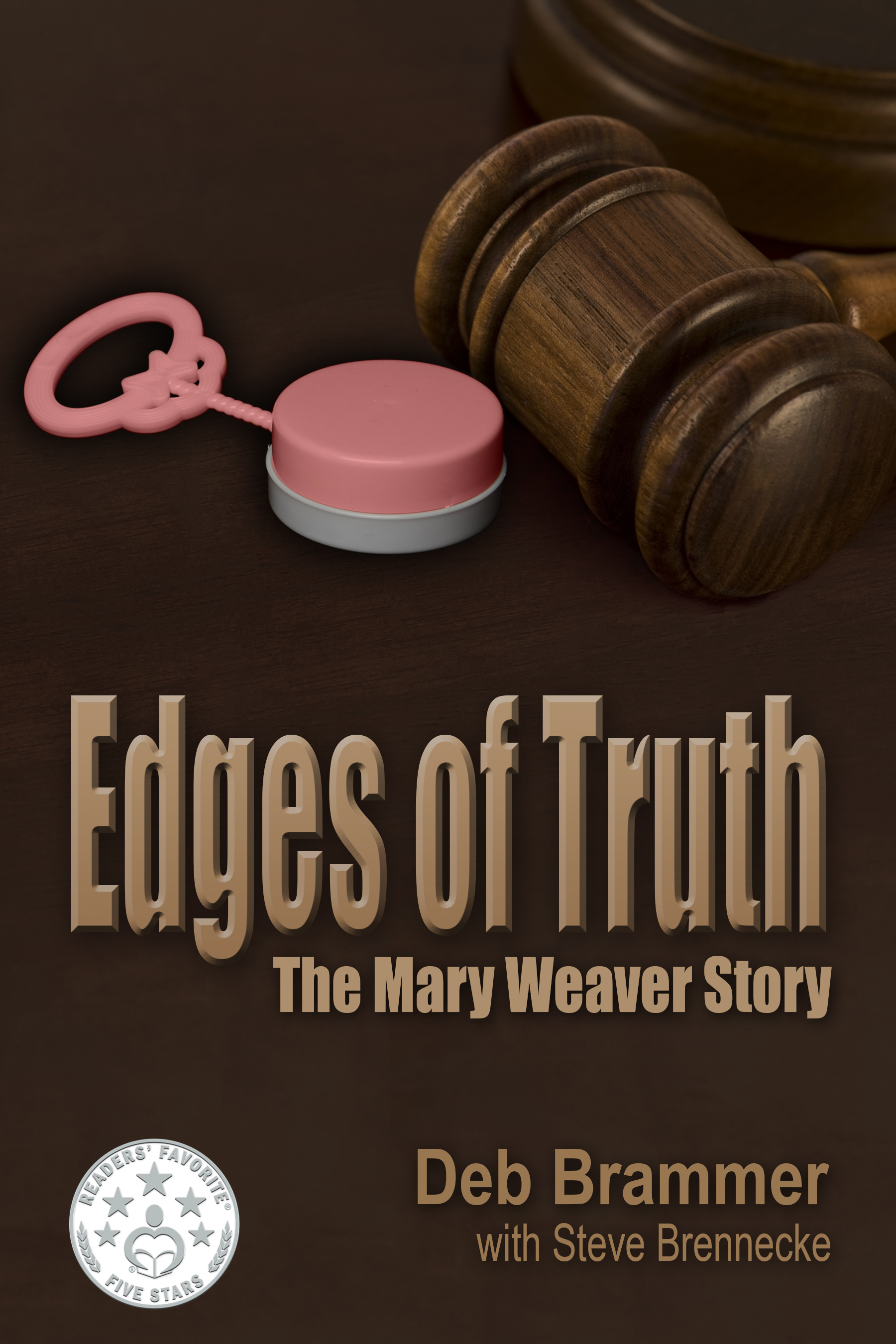
Book TitlesRecently we have chosen this title for the book I am writing: Edges of Truth: the Mary Weaver Story. If you’ve ever written a book, you know that choosing a title is a big deal. The title is one of the first things a reader looks at to determine if she wants to read your book or not. A great title helps sell the book. A bad title may send the reader to look for a better one.


If you are trying to choose a title for your book you may want to read this article:

http://debbrammer.com/writers-circle/writing-articles/Choosing%20a%20Title/ . This article tells you some characteristics of good titles and how to choose them. But today I want to take you on our personal journey to finding a book title. How we did it. Perhaps you will find an idea that helps you.


First of all why are we looking for a title? Most books have one author, but this is the personal, true story of Mary Weaver. Her lawyer was Steve Brennecke. I am directing the writing process, but Steve has also written some scenes and we are all involved in the process.


Also, if you go with a traditional publisher, your editor or the marketing department may suggest a different title than the one you have chosen. It’s not always up to you. But in this case we are self-publishing so the decision is up to us. It’s nice to be in control, but that also means we don’t have the safety net of someone else helping with the process and eliminating ineffective titles. So choosing a title was up to us and it was important that, at least the three of us, all needed to be happy with the final choice.

Getting ideas


1. I thought through the plot line for our book, searching for words that stood out in the text that could be used for titles.


This Present Chapter came from a quote by Mary while she was in prison. She knew this wasn’t the end, that God was still working and prison was just “this present chapter” of her life.


2. I viewed a video clip of a national news program which featured Mary’s story to look for concepts that could be used in a title.


This led to writing this promo sentence: Better to let 99 guilty people go free than to take the liberties of one innocent person—but what happens when the system doesn’t work? Two titles worked with that promo sentence: One Innocent Person and Stolen Liberties.


3. I wrote a list of nouns, verbs, and adjectives that characterized our book. I shuffled them around in different combinations to find titles with a good ring to them.


That led to the title Uncertain Evidence.


4. Our book is a true story which is similar to legal fiction. I Googled legal phrases to find phrases we could use or alter for a play on words.


This led to Under Oath, Final Appeal, Presumption of Guilt, and Beyond Reasonable Doubt. An article that talked about a similar situation talked about medical witnesses who were “dancing on the edge of truth.” That concept comes into our final choice of titles.


5. I Googled legal fiction and true stories on Amazon or Christian Book Distributors to see what existing titles are out there. While you can’t copyright a title, we wanted to avoid prominent titles in our genre which were already used. Viewing these titles also help me think of similar ideas.


We liked Shadow of  Doubt, but Terri Blackstock already has a prominent suspense fiction book by that title. We considered using a similar titles, Shadows of Doubt, Shadow of a Doubt, or Beyond the Shadow of a Doubt, but didn’t choose any of these in the end.


6. I typed words like these into the search box of Google images: prison, freedom, innocence, guilty, legal, court, child abuse. This gave me an idea of visual images related to those words. That suggested images we could use on our cover, images that could be related to the title.


My search gave me images of abandoned teddy bears, helium balloons flying, prison bars, people in orange jumpsuits and handcuffs. Some of these images would work with some of the legal titles.


Mary and Steve used similar ways to come up with their own titles. At the end of that process we found out one very important rule.

Titles are Subjective


They didn’t like some of my favorite titles! (Why couldn’t they see what a great choice these were?) I didn’t like some of theirs. One scary thing about self-publication is knowing that you are choosing this very important title without the help of an editor or a marketing team. We knew we needed a broader perspective.


I made a list of sixteen titles we had come up with and sent them to family members of the three of us. We suggested each person mark their top six picks for titles and number them from one to six. I had hoped that this would give us some very clear guidance about the best choices. What it did show  was that people varied widely in what they thought were good titles. But it did help us eliminate the less popular ones. I narrowed this list down to the top six titles, making sure that the top choices from Mary, Steve, and I were reflected in the list. After all, we need to feel good about our book.


Then I listed those top six titles in a survey on my website blog. I asked my Facebook friends to vote on their top three, listing them in order. I asked Mary and Steve to do the same thing with their friends. I told all these people that if they took the survey they would go into the draw to win a free book of mine. I left the survey open for one week. (Thanks to all of you who participated in the survey! Your votes were key to choosing our title.)


At the end of the week two titles stood out as the most popular. Steve and Mary and I emailed back and forth, compared notes, thought, prayed, weighed the pros and cons, and finally chose Edges of Truth.


Is this the best possible title? Probably not. Maybe five years from now we’ll think of the perfect title. Even then, if I thought it was perfect, others might not agree. But we needed to make a choice now so that we could proceed with book design and promotion. We chose one we all could live with. And then we move on. “No turning back, no turning back.”